Managing Stress in an Overloaded World
Stress Awareness Month
April is Stress Awareness Month — and this year, it couldn't feel more relevant. Between economic uncertainty, information overload, and the lingering effects of collective burnout, stress has become a near-universal experience. But awareness is the first step toward change.
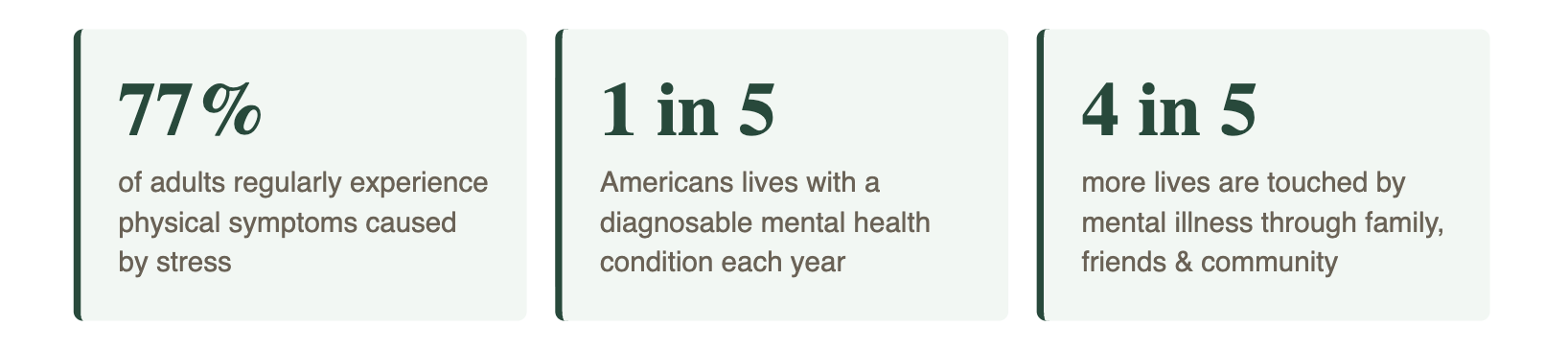
Chronic stress doesn't just affect how we feel emotionally — it reshapes our bodies, our relationships, and our ability to function. The good news? Small, consistent actions can dramatically shift our stress response over time.
Whether it's a five-minute breathing exercise, a single honest conversation, or finally scheduling that therapy appointment — every step counts. Mental health is not a destination; it's a daily practice.
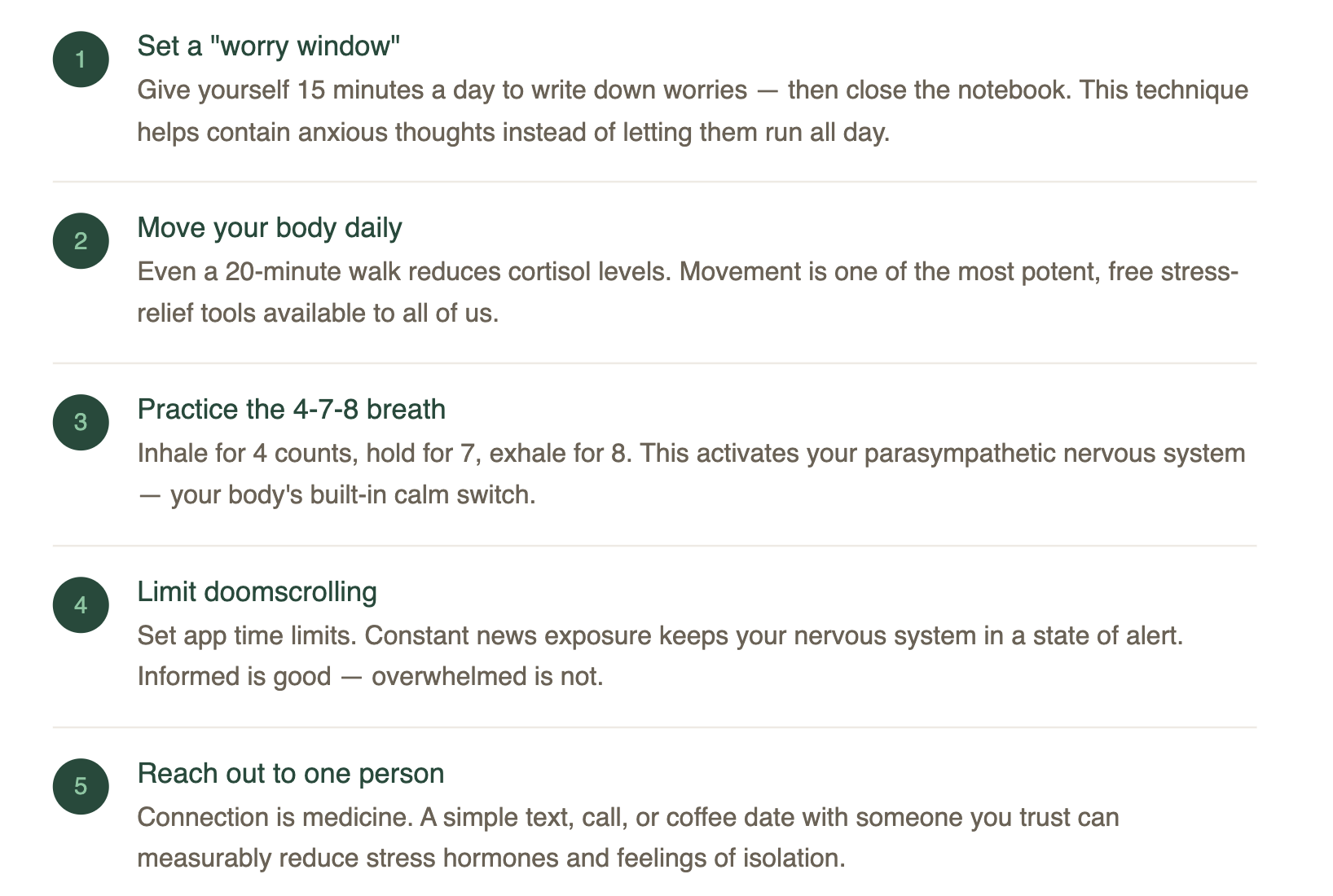
5 Things You Can Try This Month
Here are five evidence-based habits to try this month: